

In an effort to address rising food insecurity and identify opportunities for collaboration, the Community Foundation for Mason County convened a meeting with local food access leaders this past January. Nearly five months later, that meeting has evolved into partnerships that are helping bridge the gap between food supply and community need through new distribution relationships and the launch of a comprehensive Mason County Food Access Guide.
This coordination is timely, as food insecurity is being exacerbated by a challenging economic landscape. Surging fuel costs are currently placing additional pressure on lower-income households. This strain is compounded by significant reductions in federal funding of SNAP (food assistance). As federal support recedes, local food access resources are an essential lifeline for community members navigating rising costs.
The Community Foundation, dedicated to building a vibrant community through strategic philanthropy, has long supported organizations on the front lines of food insecurity, including Hand2Hand, Caritas Food Pantry, Mason County Senior Meals on Wheels, and Lakeshore Food Club.
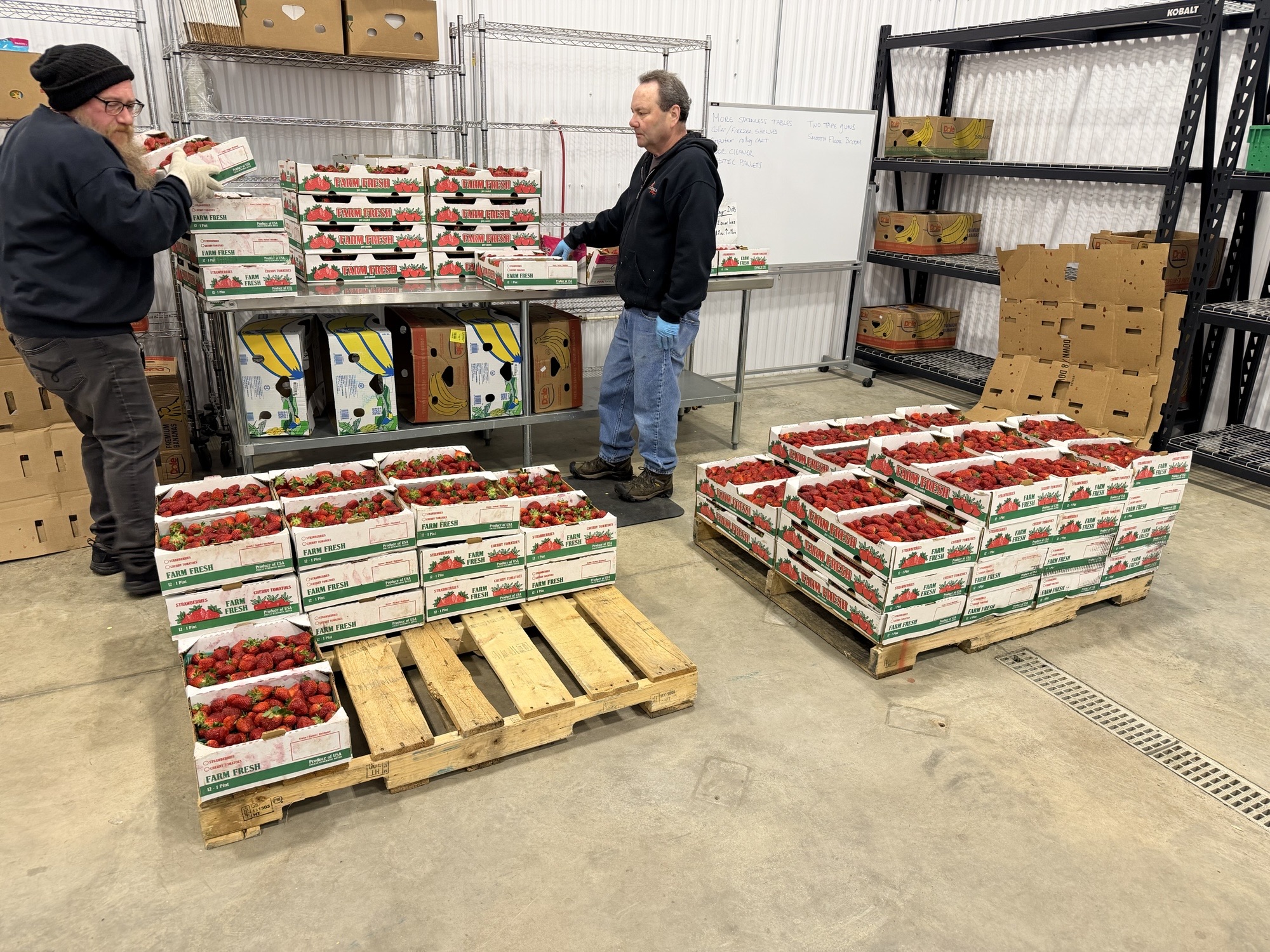
In 2024, the Community Foundation provided Lakeshore Food Club (LFC) with a grant for strategic consulting. This helped lay the groundwork for the 2025 opening of the Lakeshore Regional Food Hub in Hart. Supported by a Community Foundation grant for infrastructure, including forklifts and industrial shelving, and a $25,000 grant in early 2026 for fresh food distribution, the Hub now serves as a center for food aggregation, distribution, and logistics across Mason, Oceana, Lake, and Muskegon counties.
“These targeted investments in the Hub reflect one of our core values: to be impactful by stewarding resources strategically to create meaningful, lasting change,” said Community Foundation Executive Director Andrea Large. “It is incredibly exciting to see this kind of systems-level change moving the needle on food access while providing critical support to the dedicated organizations already serving our community.”
The Community Foundation’s January meeting was inspired by the Community Foundation for Oceana County, which convened a similar meeting and developed an Oceana County Food Access Guide last year.
During the Mason County food access meeting, representatives from across the county shared details of their programs and discussed the unique challenges they face. It was during this time that the Lakeshore Food Club highlighted the Hub’s capacity as a Feeding America redistribution site, offering rescued retail food at no charge and utilizing state funding for fresh produce.
“We are building a sustainable, efficient, and equitable food system that strengthens local agriculture and ensures fresh, healthy food reaches those who need it most,” said O’Nealya Gronstal, LFC Executive Director.
Partnerships formed during the meeting have already brought about significant change. For The Salvation Army and Cornerstone Baptist Church Food Pantry, the connection to the Hub solved a major hurdle: the high cost of meat. Tammy Miller of The Salvation Army noted that the Hub’s regular deliveries of meat and baked goods have “alleviated our budget, and we are able to use those funds to support other needs of our clients.”
Following the meeting, food access leaders responded to a survey to provide specific details about their operations. This data allowed the Community Foundation to build a comprehensive local food access guide. The project was strengthened by partnerships with District Health Department #10 (DHD#10) and West Michigan Community Mental Health (WMCMH), which became involved after realizing they were independently attempting to collect and distribute similar information.
“Our organization is invested in this work because we recognize the importance of addressing food insecurity and improving access to basic needs in our community,” said Lori Schummer, Director of Public Relations and Customer Service at WMCMH. “My hope is that the resource becomes a trusted, easy-to-access tool that helps more individuals and families quickly connect to available food supports.”
Gracie Kierczynski, Public Health Educator at DHD#10, added, “We hope this resource continues to grow over the years and becomes a trusted, central place where community members can find food access resources.”
The resulting Mason County Food Access Guide is a comprehensive roadmap for the community. It includes everything from pantry and food club locations to information about senior meals, youth backpack programs, and mobile food trucks. The guide is also a tool for those who want to give back — listing which organizations need volunteers, how to donate funds, and even how local farmers and hunters can share food and legally harvested game with their neighbors.
The Community Foundation plans to gather food access leaders again and will update the Mason County Food Access Guide annually with support from partners. Community members are encouraged to share the guide through their personal and professional channels. Suggestions for additions or edits may be emailed to info@cffmc.org.
The Mason County Food Access guide is available at https://mason-foundation.org/mason-county-food-access/.